
1900–1910: Even Older Statesman
The Old Devil of Mayfair
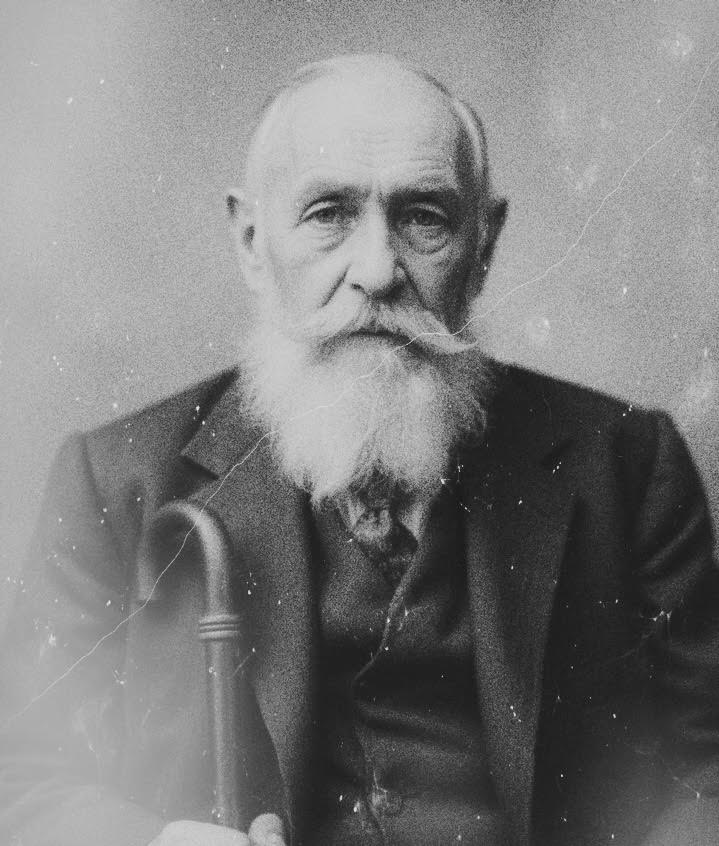
Sir Stanley, c. 1904
At the turn of the century, Sir Stanley Rawlinson — eighty-six years old, indefatigable, and increasingly deaf to good sense — exchanged his beloved Luton for the refinement of Mayfair. There, he and Maryka took up residence in a handsome suite of apartments that looked down over Grosvenor Square.
To outsiders, it was an inevitable migration of power to proximity: "closer to the seat of government," Stanley claimed loftily. But Maryka, ever the realist, offered her own interpretation: it was "to be nearer to quality medical care — in case the old devil's heart can't keep up with the rest of him."
The Boxer's Last Bout (1900)
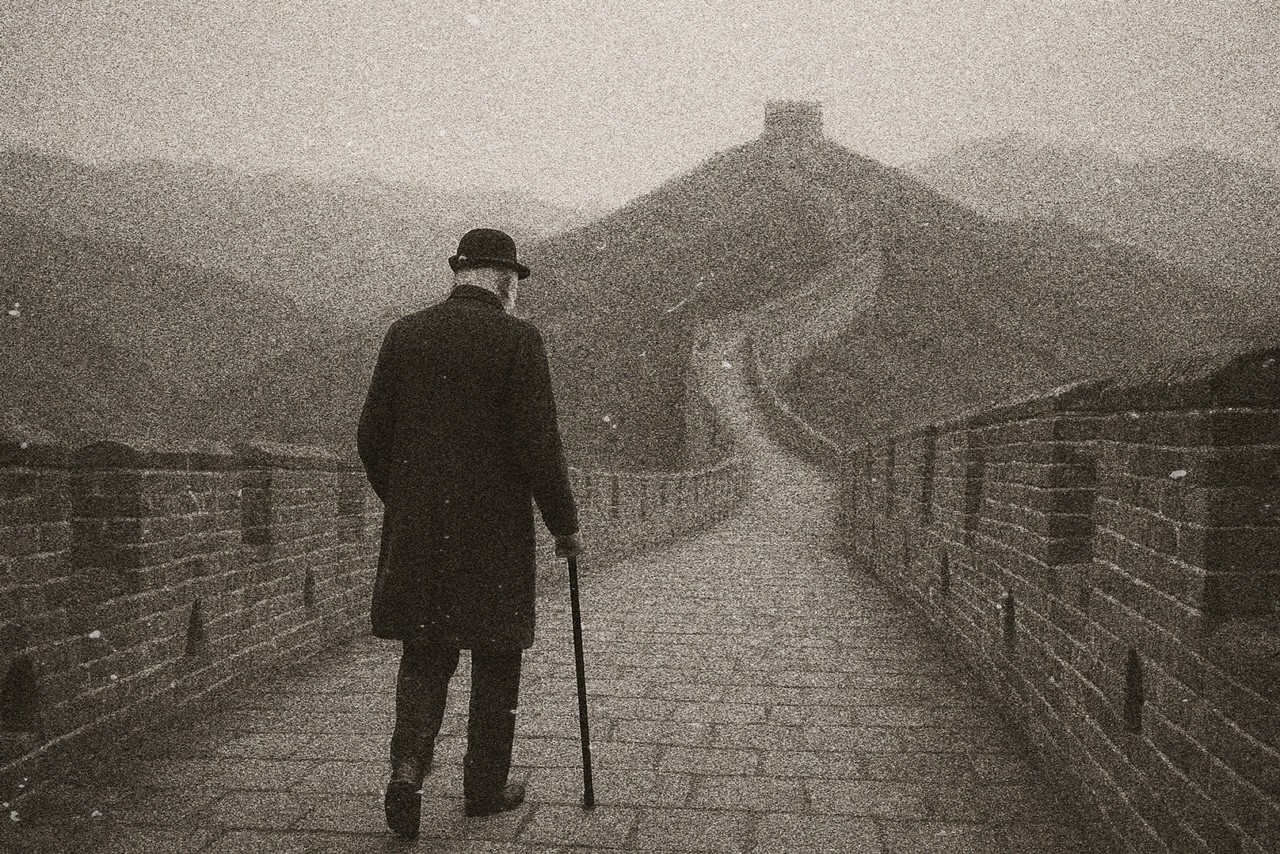
The Great Wall of China, visited during the Boxer negotiations
Whatever her motive, the move placed Stanley precisely where Lord Salisbury needed him when crisis struck. In the opening days of 1900, as reports arrived of the Boxer Rebellion in China — peasant militias, with covert state backing, besieging foreign legations in Peking — Salisbury sought an elder statesman who might unite the fractious Great Powers. The choice of an octogenarian seemed quixotic. Yet the Prime Minister, perhaps recalling Rawlinson's network of continental friendships and his experience in the crucible of Sevastopol, believed him the one man capable of bridging Europe's jealous divides.
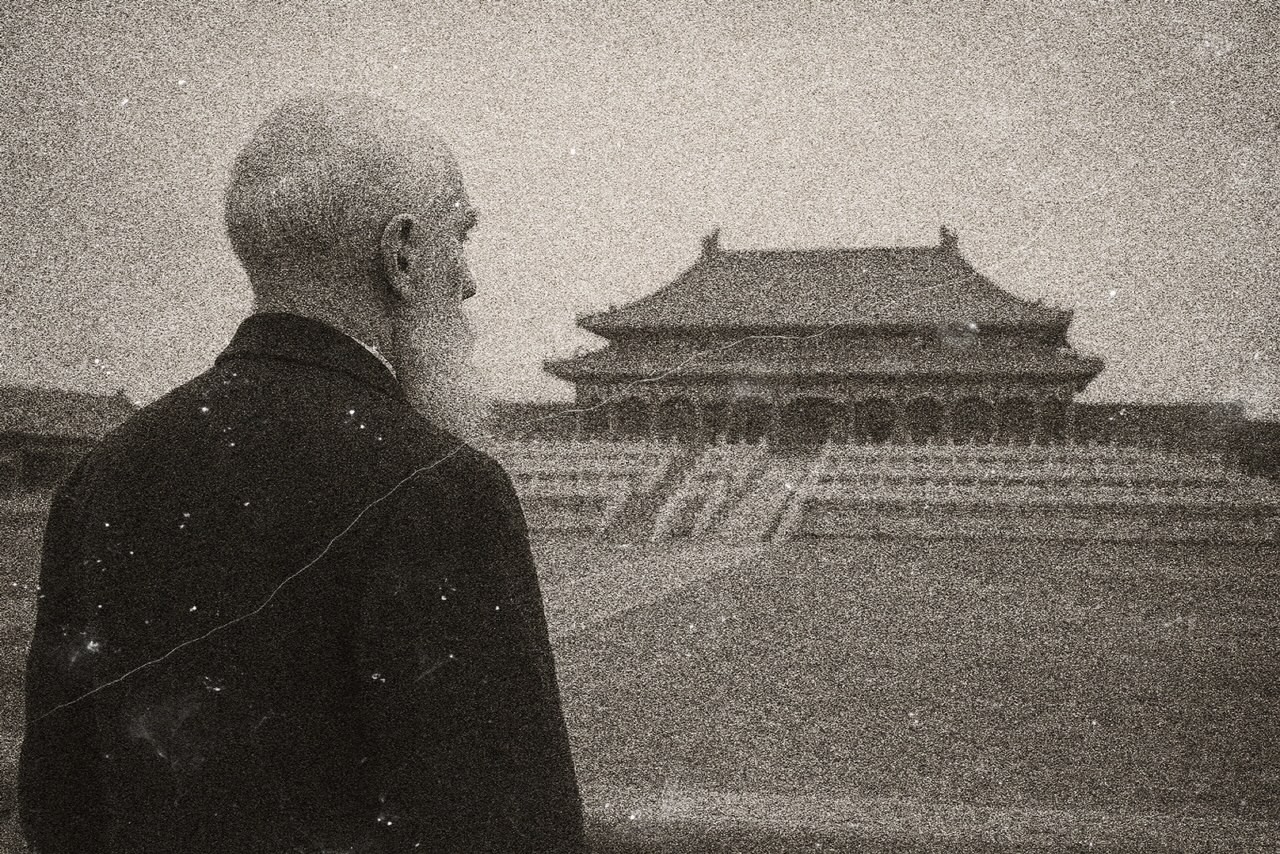
The Forbidden City, Peking
And so, for several feverish months, Stanley wrote, cajoled, and charmed his way across the chancelleries of Europe. The improbable result was the so-called Eight-Nation Alliance — Britain, France, Germany, Austria-Hungary, Russia, Italy, Japan, and, somewhat belatedly, the United States, whose new President, William McKinley, was keen "to demonstrate clear water between himself and his predecessor on any and every topic — including that of Mr Rawlinson."
In London, newspapers dubbed it the "Rawlinson Alliance," a title that alternately amused and mortified its namesake.
By the summer of 1900, the allied forces had relieved the Peking legations and crushed the rebellion. Stanley, dispatched eastward to take part in the post-conflict negotiations, arrived only to be appalled by the aftermath. Looting, rape, and reprisal killings were widespread. The civilised powers, he wrote bitterly, "had conducted themselves like feral animals among the citizenry, guilty and otherwise."
"…the troops of all nations (our own among them) conducting themselves like feral animals among the citizenry (guilty and otherwise) can only bring shame to our 'civilised' nations. I will not remain a part of these negotiations which, under the guise of bringing stability to the region, amount to the expansion of Empires by another name. I entered into this enterprise in order to avert another bloody war, and yet what I witnessed was worse by a thousand orders of magnitude."
Disillusioned, he demanded that his name be struck from any official record of the alliance, renounced the term 'Rawlinson Alliance' and left China at once. He was back in England by December, weary and embittered, just in time to witness the end of an era.
The Queen Is Dead (1901)
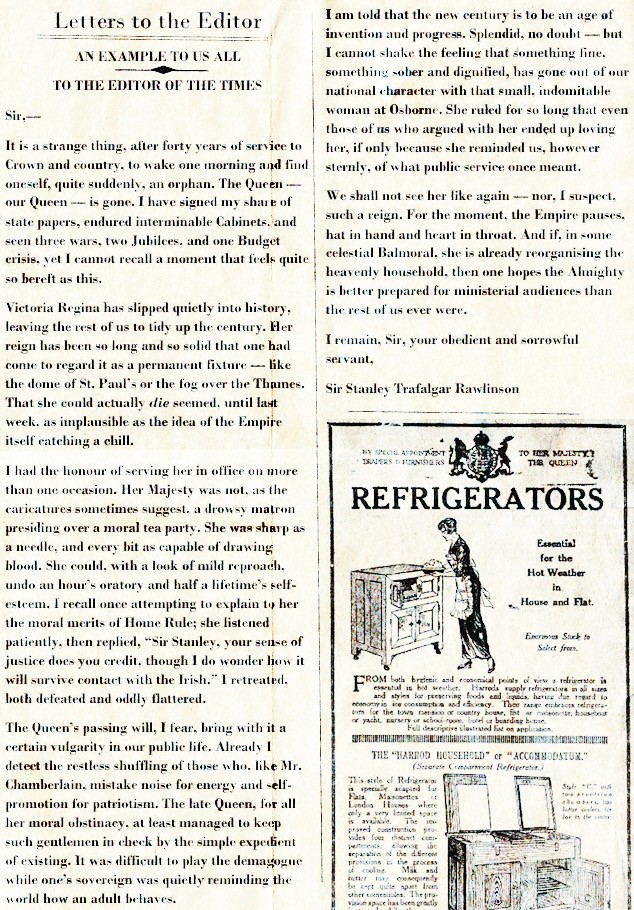
Letter to The Times, January 1901
On 22 January 1901, Queen Victoria — the monarch to whom he had devoted the greater part of his life — died at Osborne House after sixty-three years on the throne. Britain, for once, stood still. Among the many letters published in The Times that week was one from Sir Stanley, austere and heartfelt in equal measure:
It was the tribute of a loyal servant to a departed sovereign — but also a thinly veiled warning to her successor, whose tastes for parade and politics Stanley did not entirely trust.
"The late Queen, for all her moral obstinacy, at least managed to keep such gentlemen in check by the simple expedient of existing. It was difficult to play the demagogue while one's sovereign was quietly reminding the world how an adult behaves."
The Winter Palace Incident (1905)
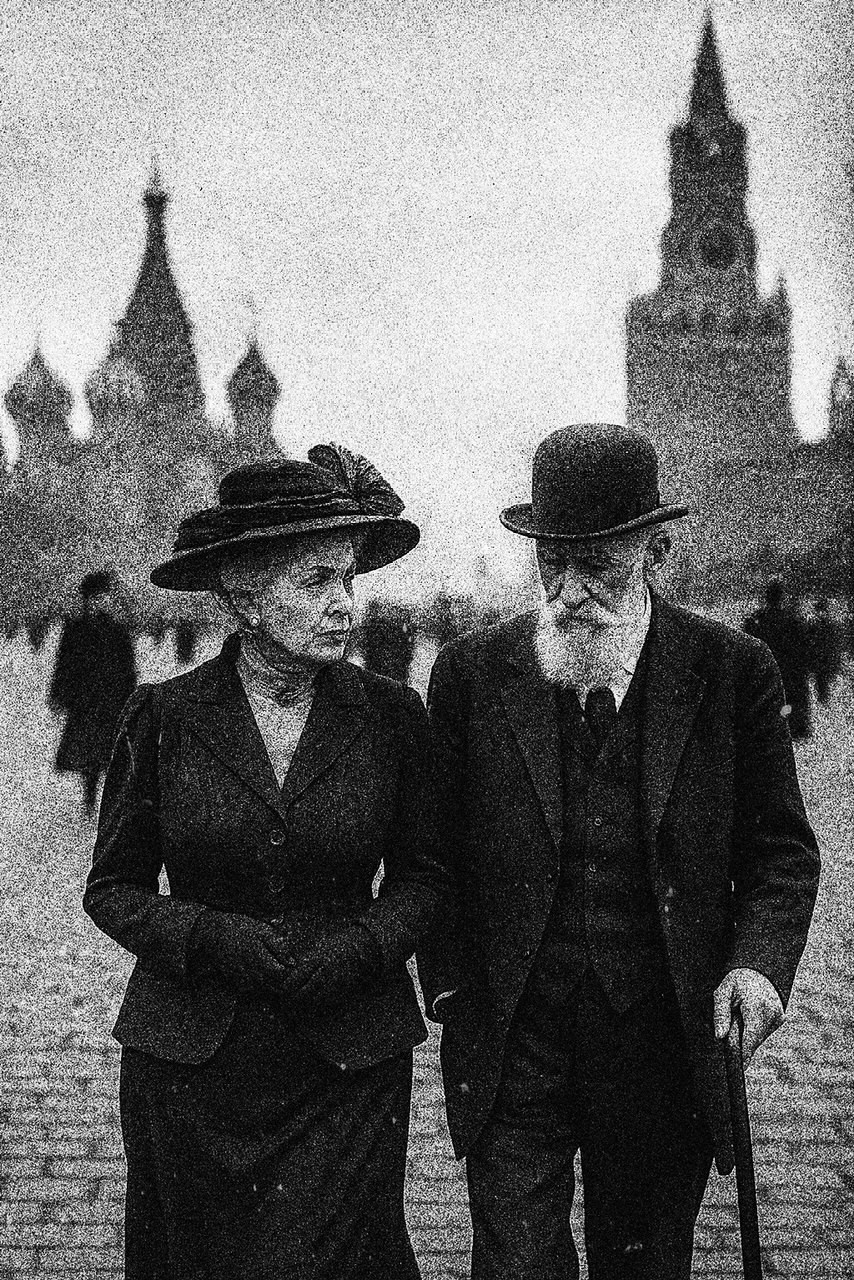
The Rawlinsons in Moscow
By late 1904, the lure of Russia — that old adversary and fascination of his youth — proved irresistible once again. Relations between Britain and the Tsar's Empire were slowly thawing, and Stanley, ever the opportunist, wished to see with his own eyes the Moscow and St Petersburg that had haunted his imagination since Crimea. He and Maryka set off by train across Europe, pausing in Warsaw, before reaching the Russian capital at the turn of the year.
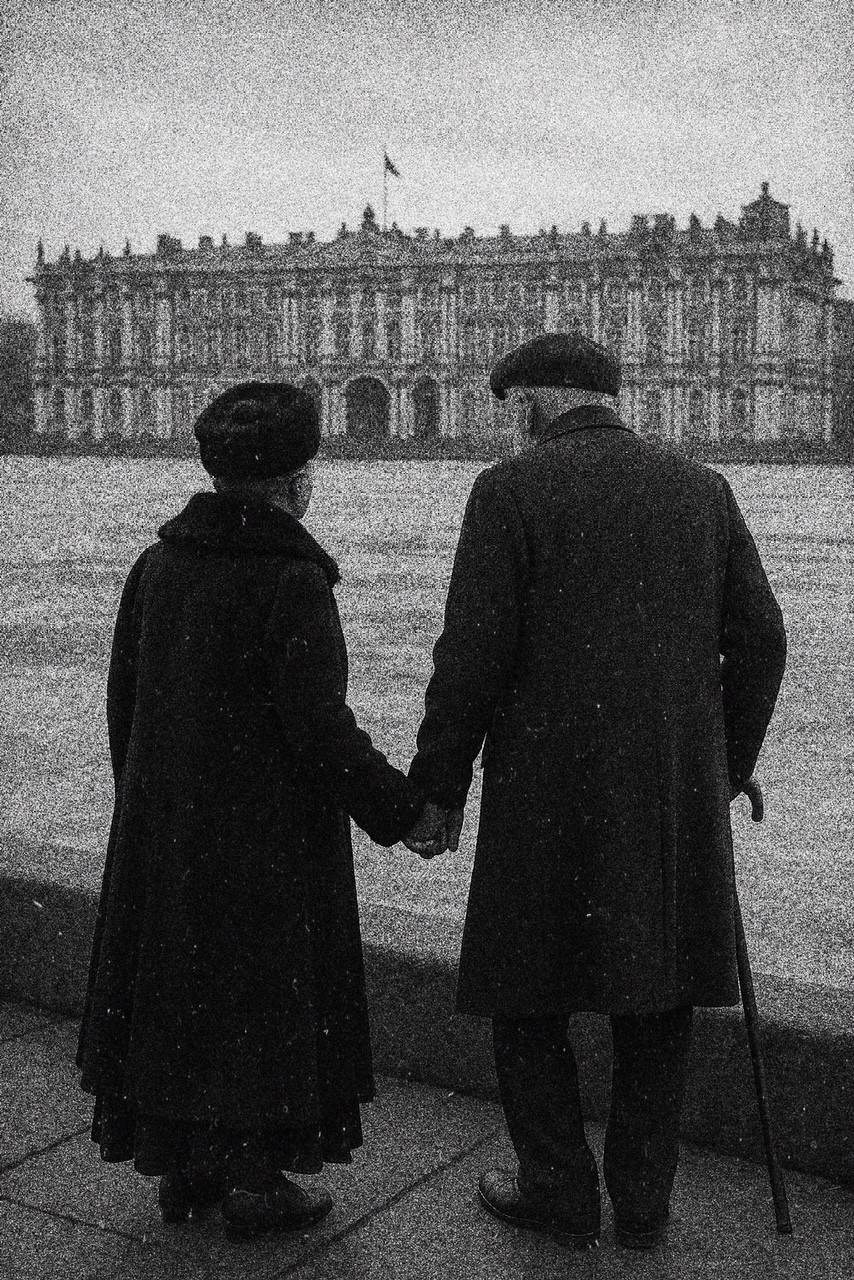
At the Winter Palace, St Petersburg
In January 1905, while the Rawlinsons were in St Petersburg, the city erupted. On the 22nd, guards opened fire on peaceful demonstrators outside the Winter Palace in what history would know as Bloody Sunday. Panic spread; revolution simmered. Sensing danger — and, worse, the potential for being blamed — Stanley fled:
The visit began well. Old acquaintances from his Crimean days welcomed him; Count Sergei Witte, the Tsar's formidable advisor, hosted a dinner in his honour. But Stanley's delight in the "spectacle of Muscovy" was short-lived. He soon noticed, as he wrote later, "considerable attention being paid to me by men who were neither admirers nor particularly discreet." The Okhrana, the Tsar's secret police, were keeping him under clumsy surveillance — a compliment he found insulting.
They escaped by steamer from Kronstadt to Helsinki, returning to England with both sympathy for the Russian people and contempt for their rulers intact.
"…given my long personal history of Tsar-baiting, I determined that my presence ran the risk of being attributed as a possible cause of the current benjo. For once, I was an innocent party, so we scarpered!"
Verses and Void (1906–07)
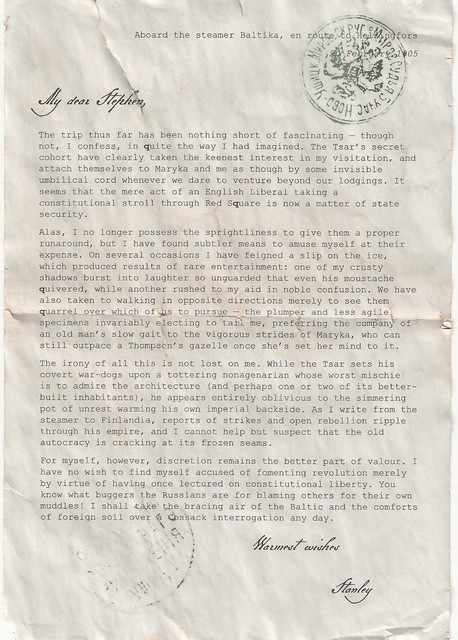
Letter on Russia, 1905
Back in London, Stanley turned briefly inward. In 1906, he persuaded his long-suffering publisher to issue Collected Verse — a slim anthology of his poetry accumulated over decades. Critics, alas, were merciless. Admirers of his prose found little to love in his rhymes, which one wag in The Spectator called "verse that scans only under duress." Commercially, it fared worse. "Unlike his memoirs and academic monographs," one later critic observed, "it proved neither esteemed nor viable."
That same year brought a triumph of a different kind: the Liberal landslide election. Stanley's delight was unrestrained. The defeat of the Conservatives — and of his old foe Chamberlain — filled his letters with almost boyish glee.

Letter on the death of Maryka, 1907
But the following year brought tragedy. Maryka, his lifelong companion, muse, and match in wit, died after a short illness. Her passing, he confessed, "removed a presence that steadied my temper, softened my conceit, and endured my many peccadilloes."
The funeral reflected her character: modest in ceremony, magnificent in company. Politicians past and present attended, along with leading writers and artists — and, most poignantly, Archduke Franz Ferdinand and Duchess Sophie, who had sailed from Trieste to pay their respects.
The Last of the Dining Lions (1908–10)
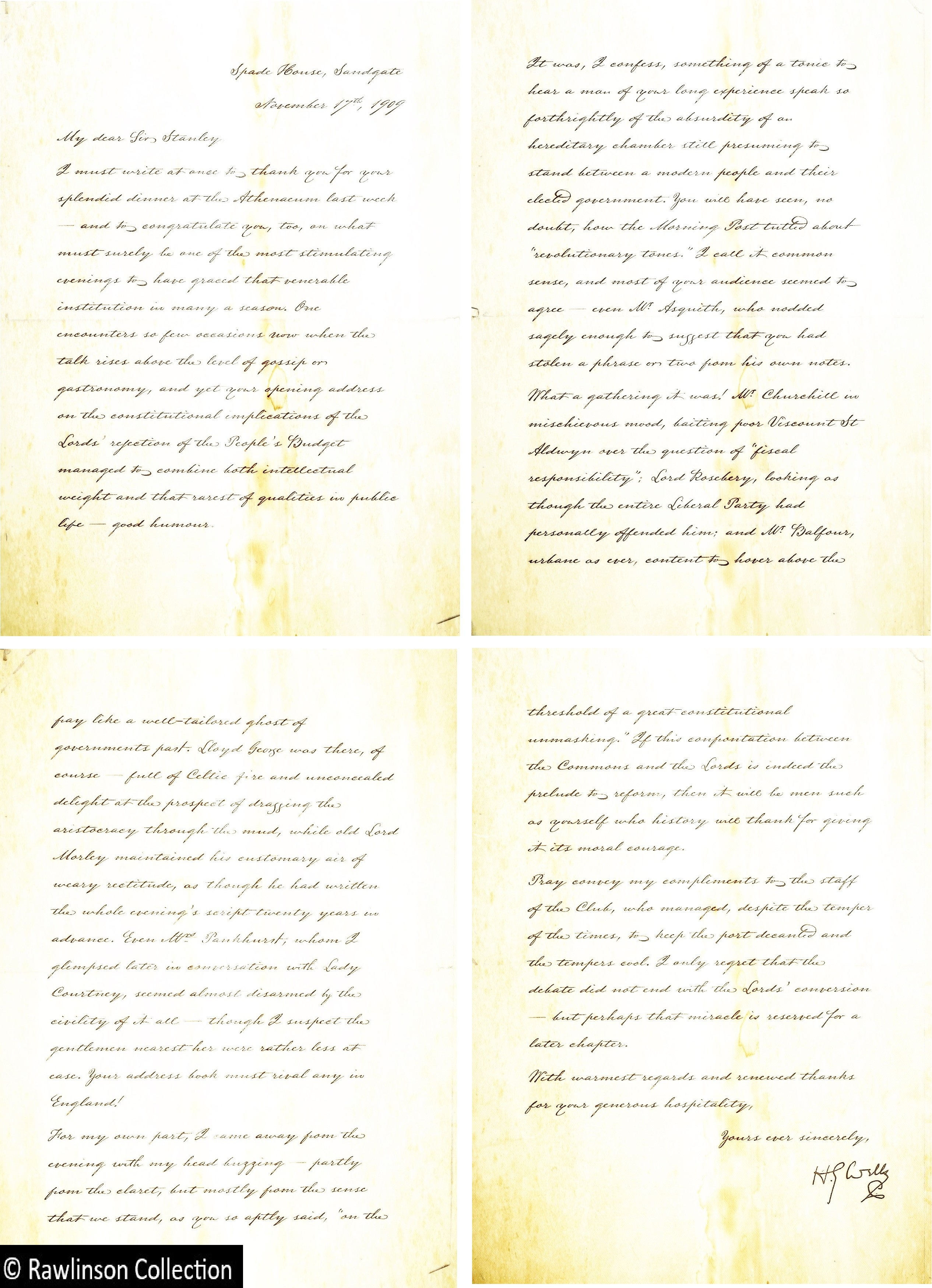
Letter from H.G. Wells, 1909
In widowhood, Stanley retreated neither to solitude nor silence. His Mayfair apartment became a hub for conversation and reminiscence; his "Dining Society" convened regularly, drawing together the remnants of an era — generals, poets, explorers, and upstarts. As one 1909 letter from H. G. Wells attests, the guest list was dazzling. Wells wrote of "a night of roaring laughter, immoderate claret, and the incomparable company of a man who had lived through more histories than most of us shall ever read."
Stanley, though subdued, remained unbowed — a relic of the Empire's golden century, still writing his letters to The Times, still mentoring, still grumbling, still adored. The heart that Maryka once doubted could "keep up with the rest of him" was proving, against all odds, the most tireless part of all.